Certified B Corporation — Adaptive Retrofit — Humanising Infrastructure — Making better places — Architecture — Public Realm — Spatial Strategy — Creative Reuse — Urban Transformation — Decarbonisation —

Hospitality Business Recovery— Westminster, London

Client(s)

Westminster City Council

Collaborator(s)

NRP

5th Studio worked with Westminster City Council to develop plans to transform the city in order to help bars, clubs and restaurants to reopen safely as lockdown rules relaxed.

Westminster is the social heart of London, and businesses in the borough produce 3% of Britain’s GDP. These temporary measures were aimed at allowing businesses to reopen in the summer of 2020.

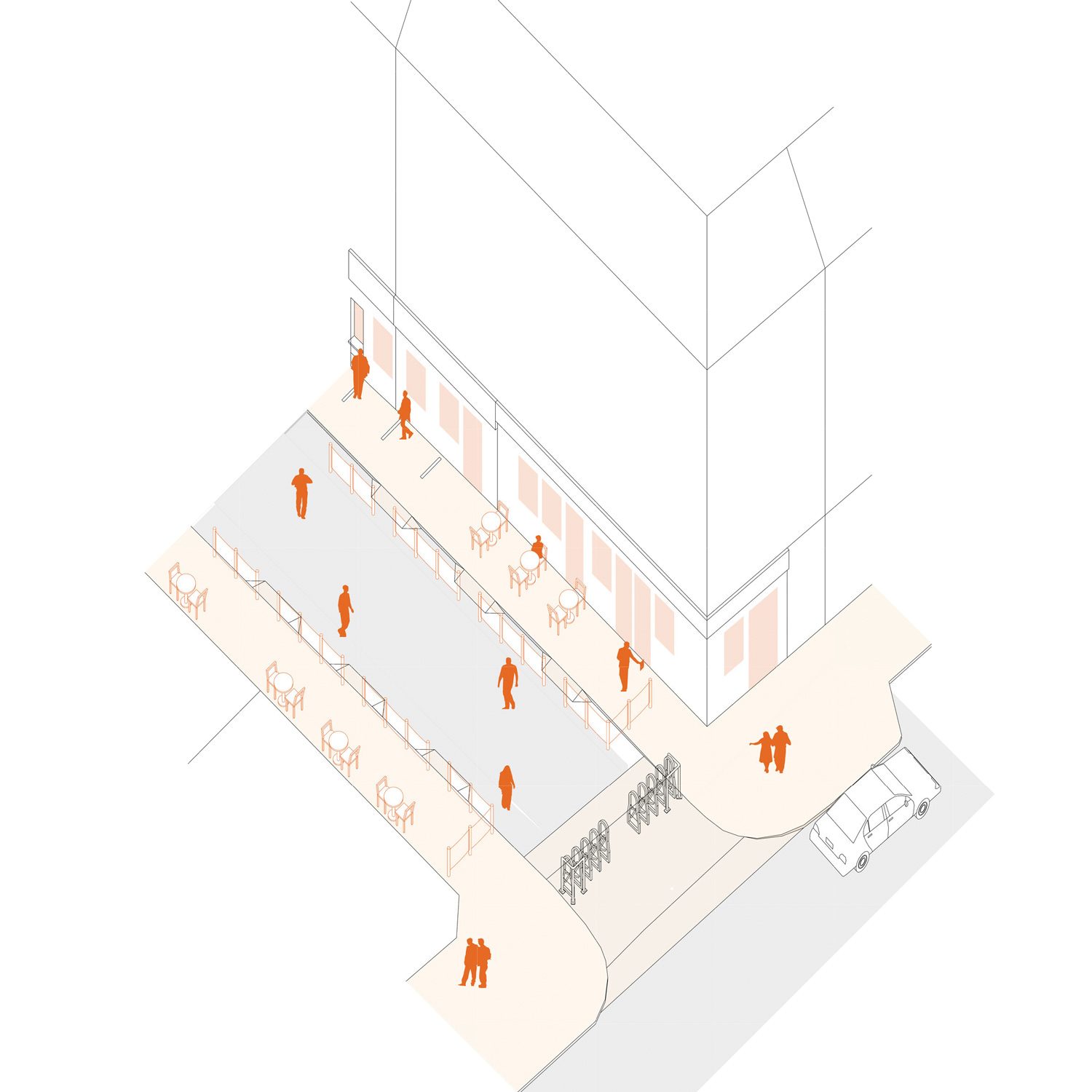
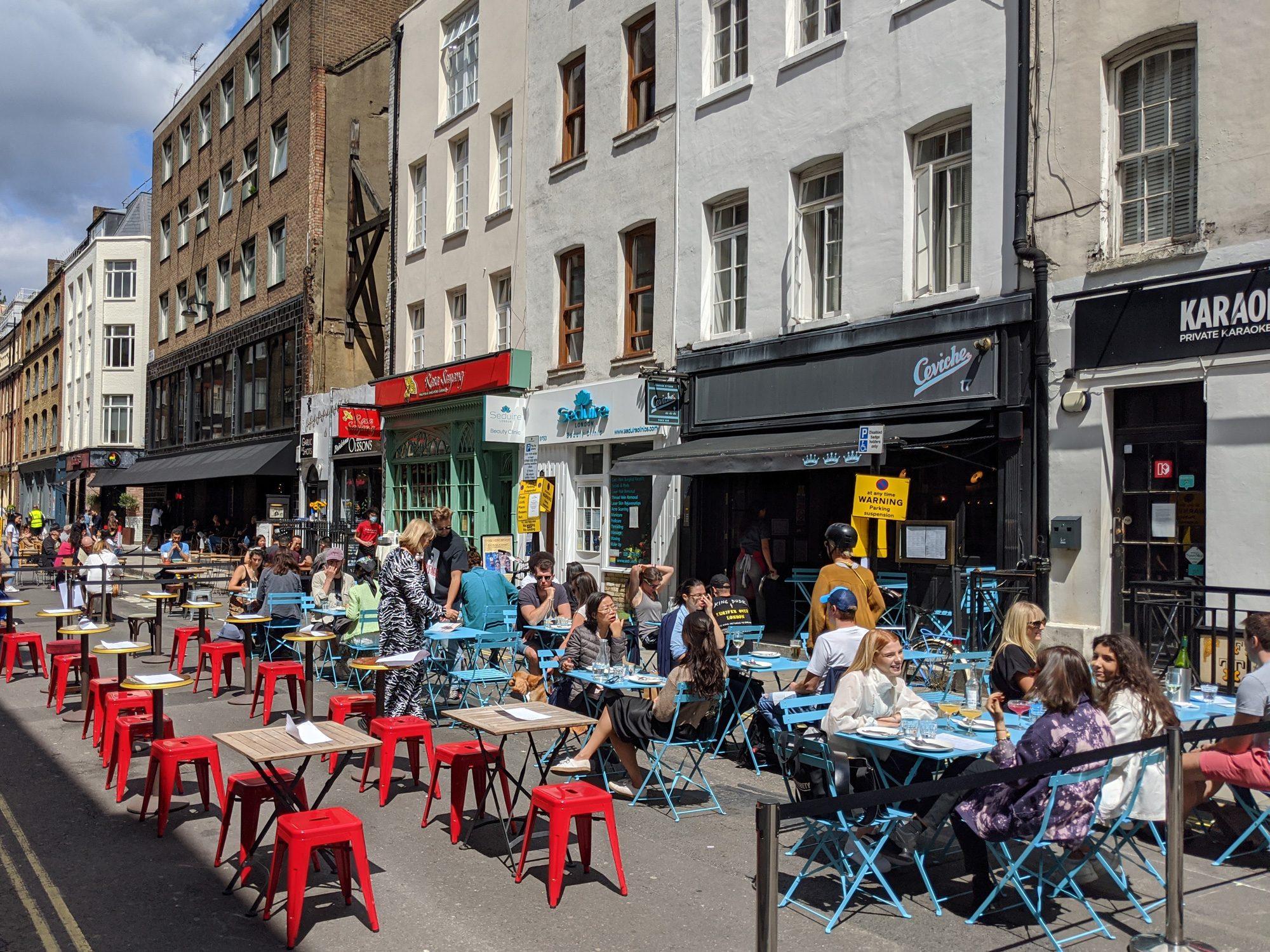
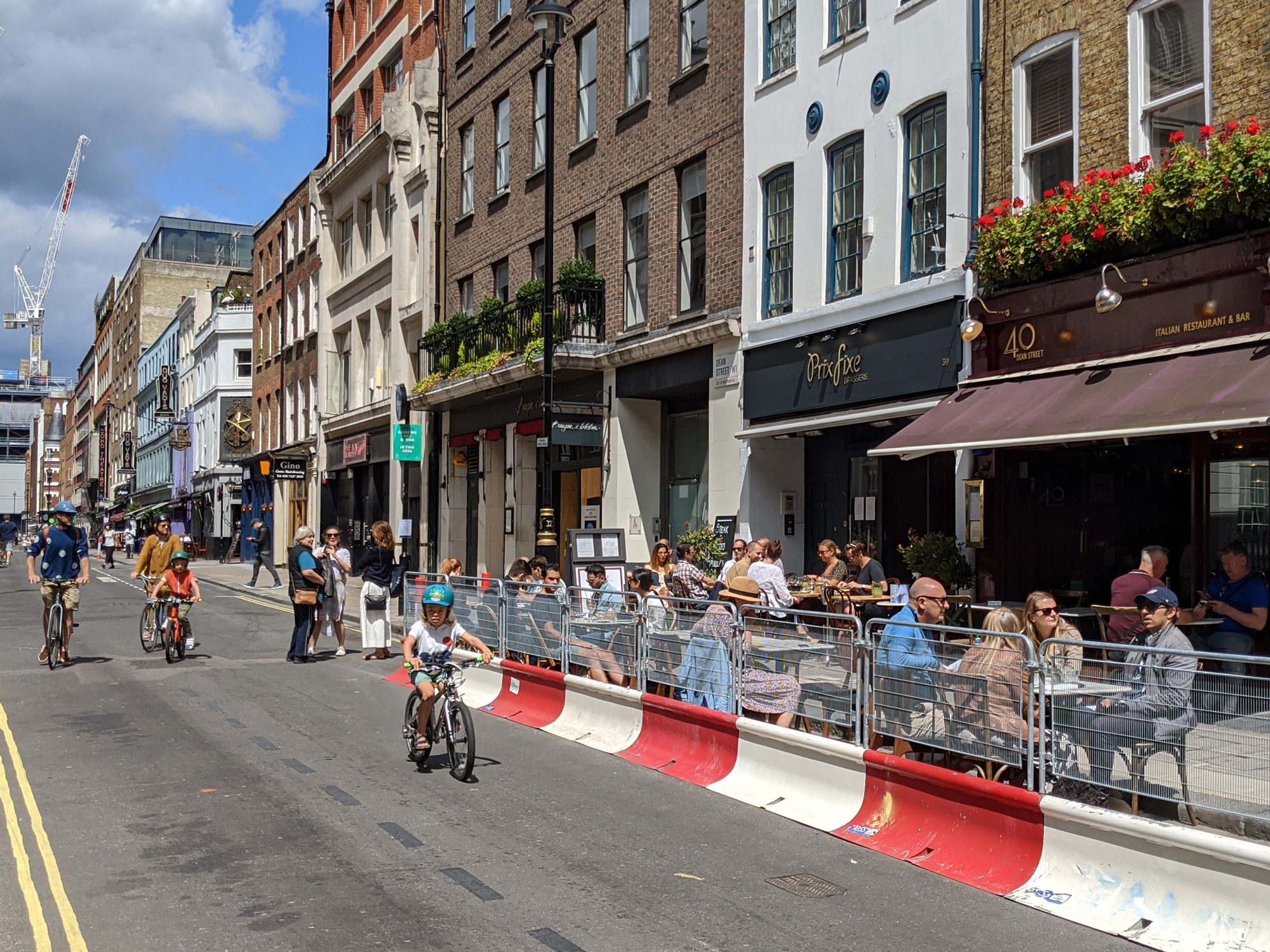
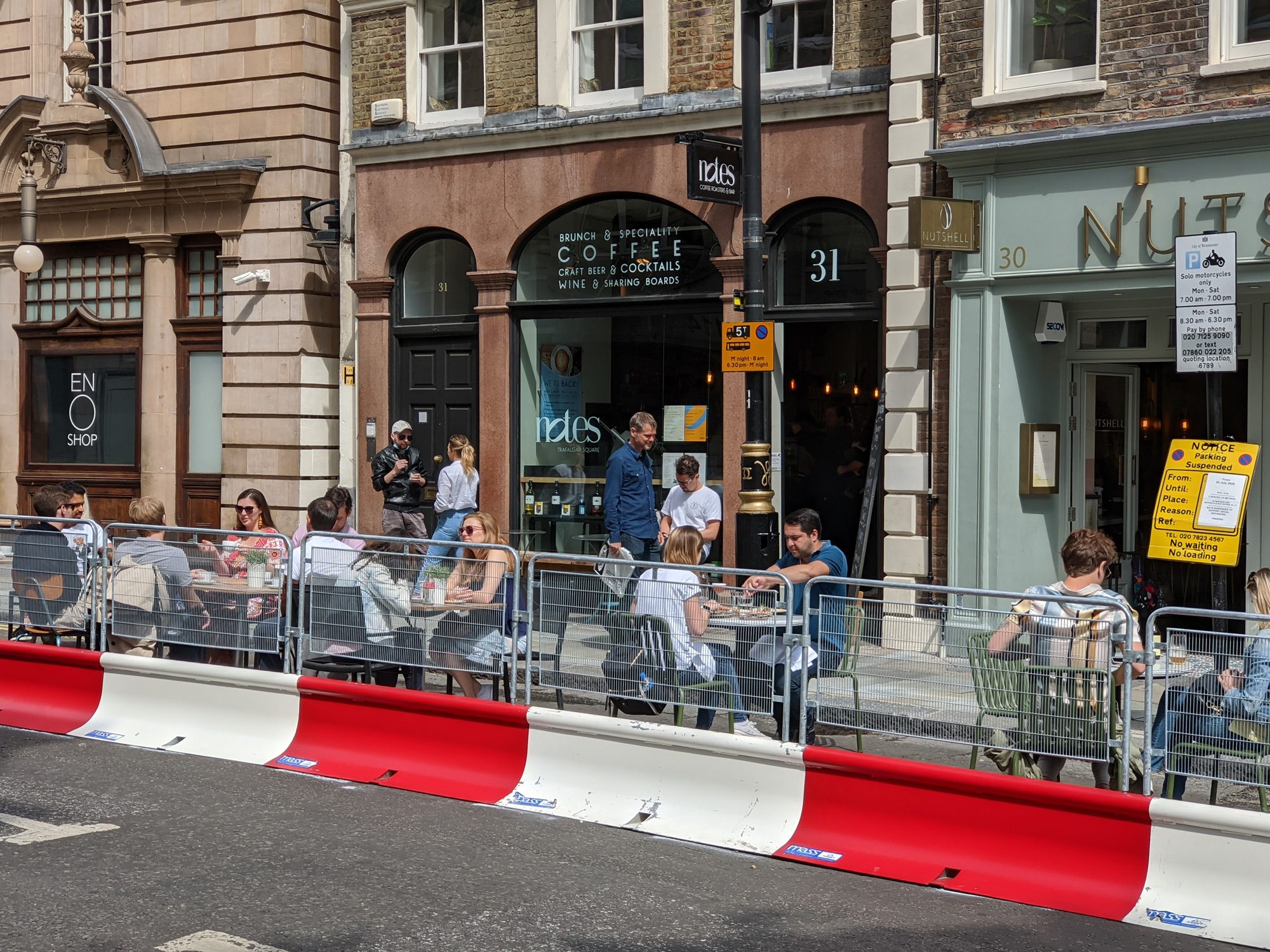
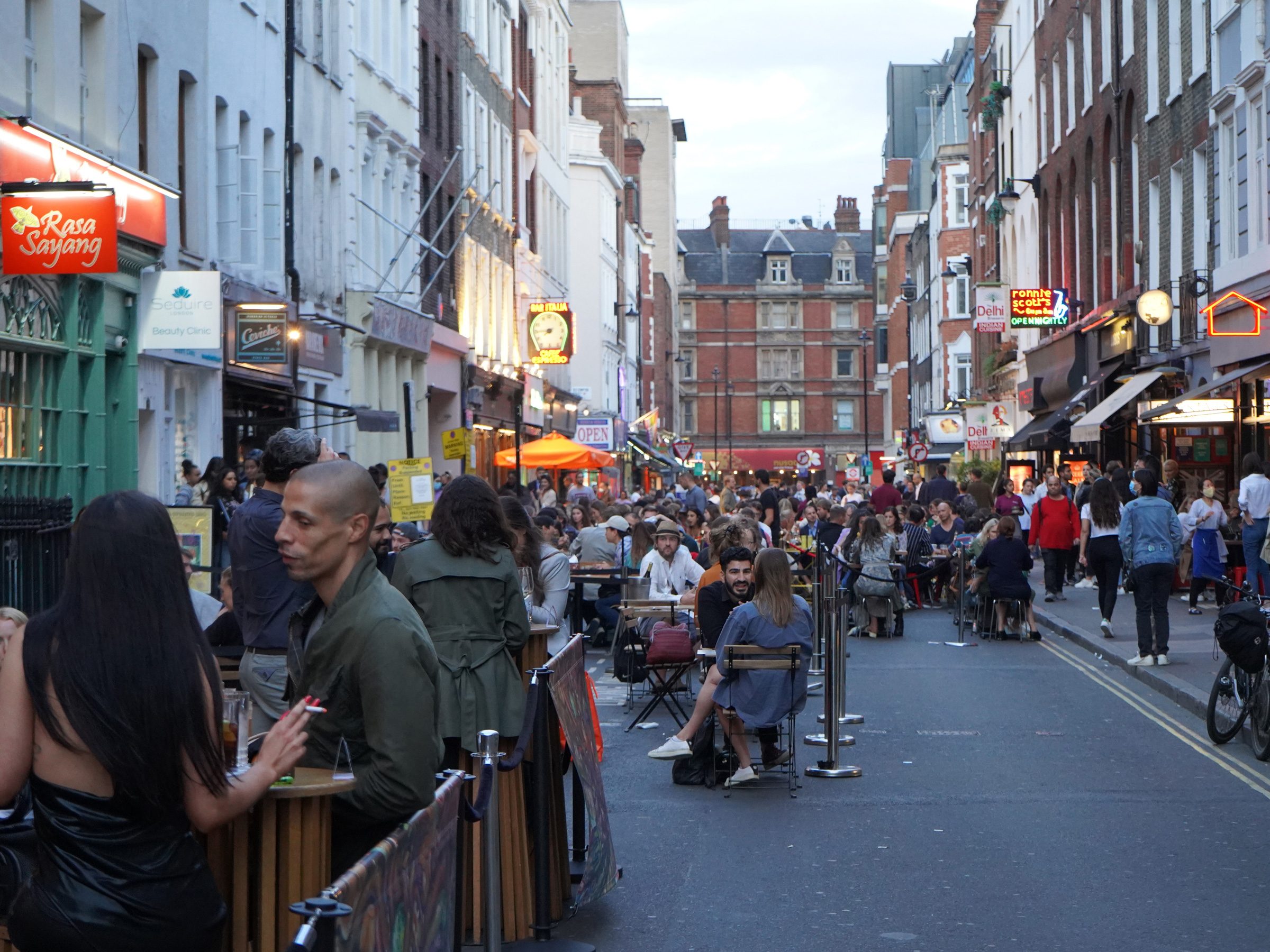
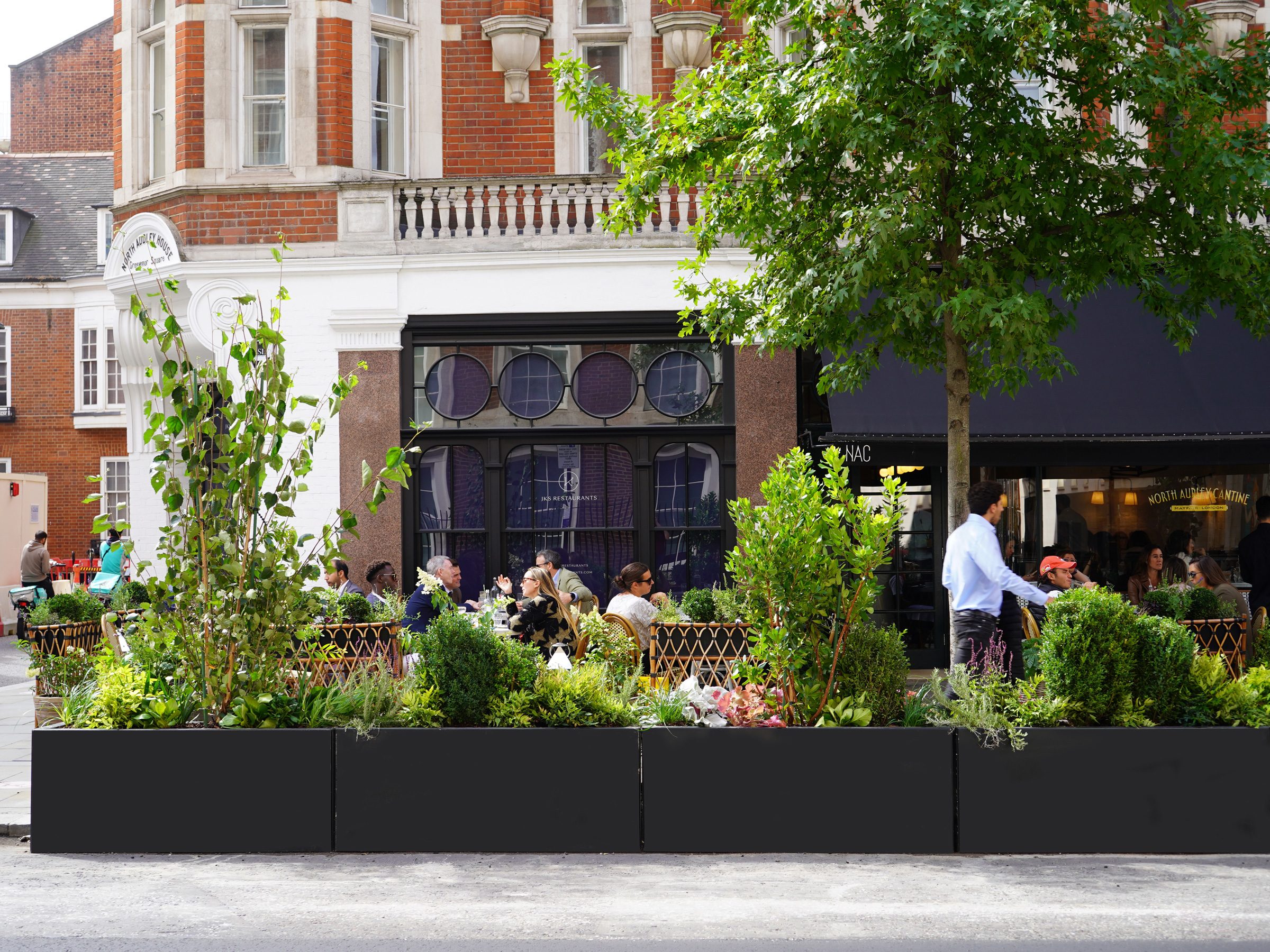
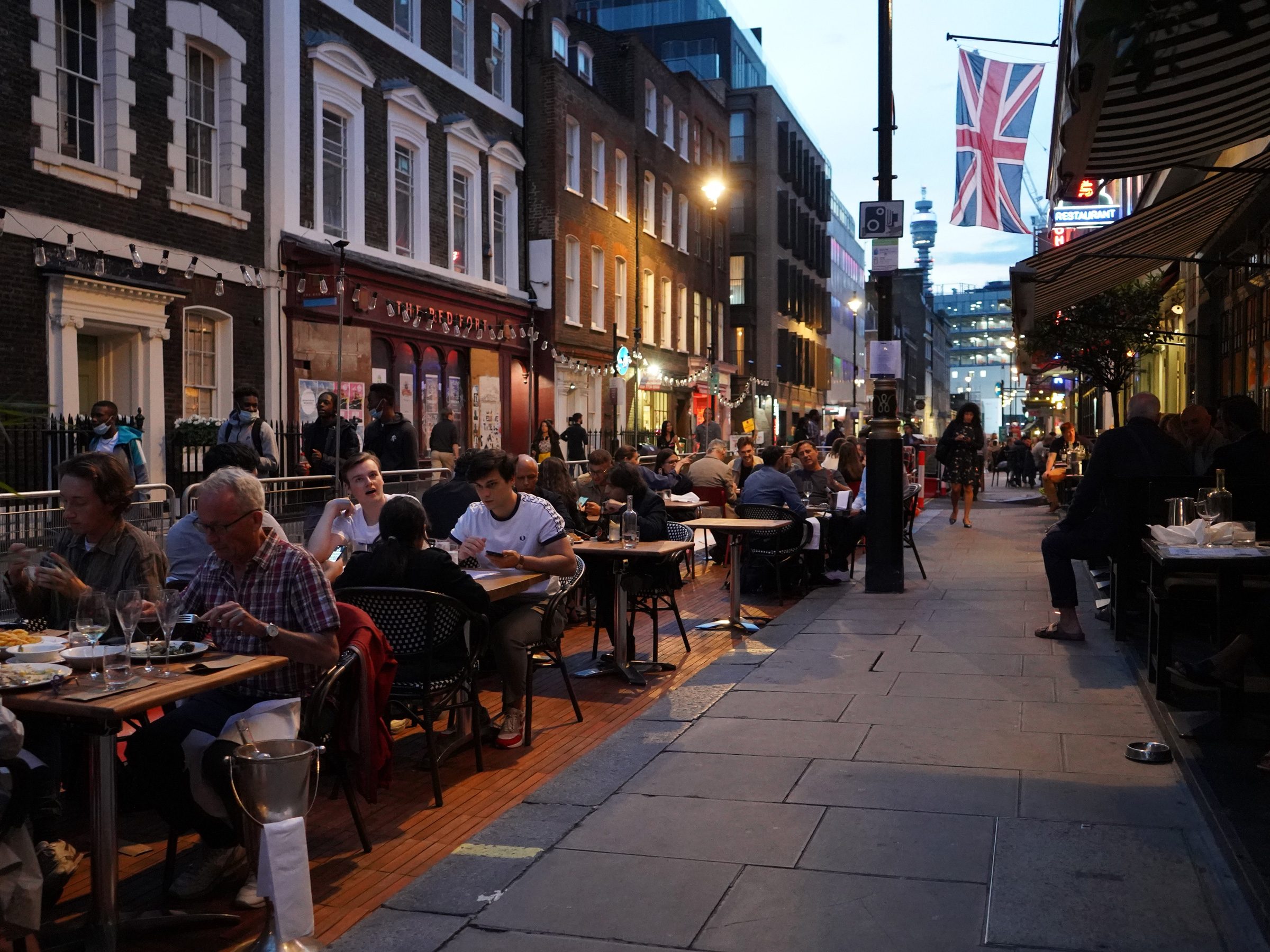
5th Studio’s work on public realm improvements focused initially on Soho, but also covered Covent Garden, Marylebone and Mayfair. The work developed options for al fresco dining, extending pavement space and in some cases allowed timed closure of roads to allow dining in the space of the street.

More generally, cities around the world are beginning to transform to address the challenges of the climate emergency, and this process of change has been accelerated by the Covid-19 pandemic, bringing urgent realisation to urban initiatives from the Parisian proximate “ville du quart d’heure”, to Amsterdam’s adoption of Kate Raworth’s balanced economic model to guide how cities and business can become more resilient and adaptable as spatial and urban requirements shift.

In London, the Mayor Sadiq Kahn has been developed an integrated set of policies called Good Growth by Design. As a Design Advocate for the Mayor, 5th Studio Director Tom Holbrook has been helping develop policy on a number of these strands, including the Public London Charter, and Designing for a Circular Economy. The Good Growth programme was the foundation of the city’s response to the pandemic.
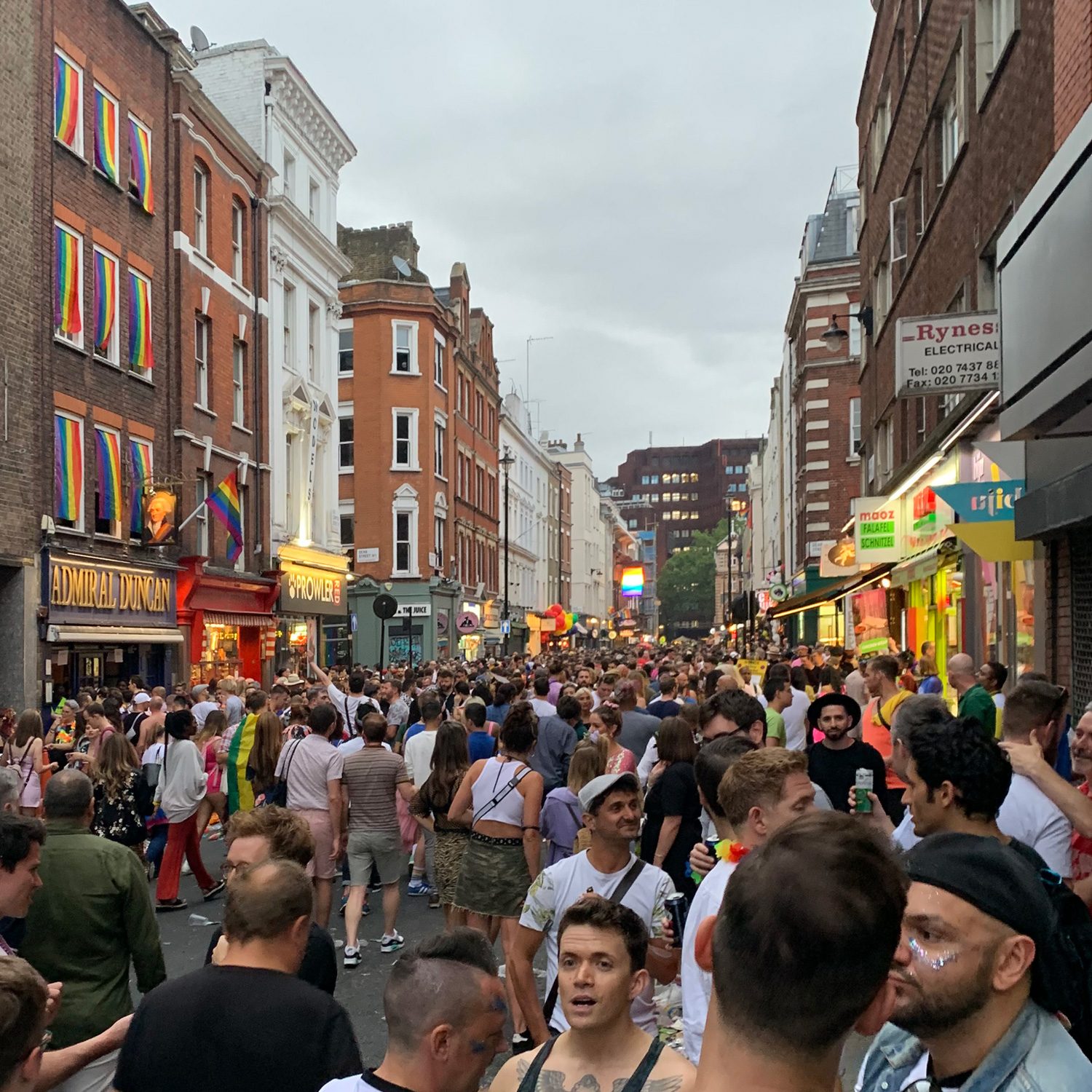
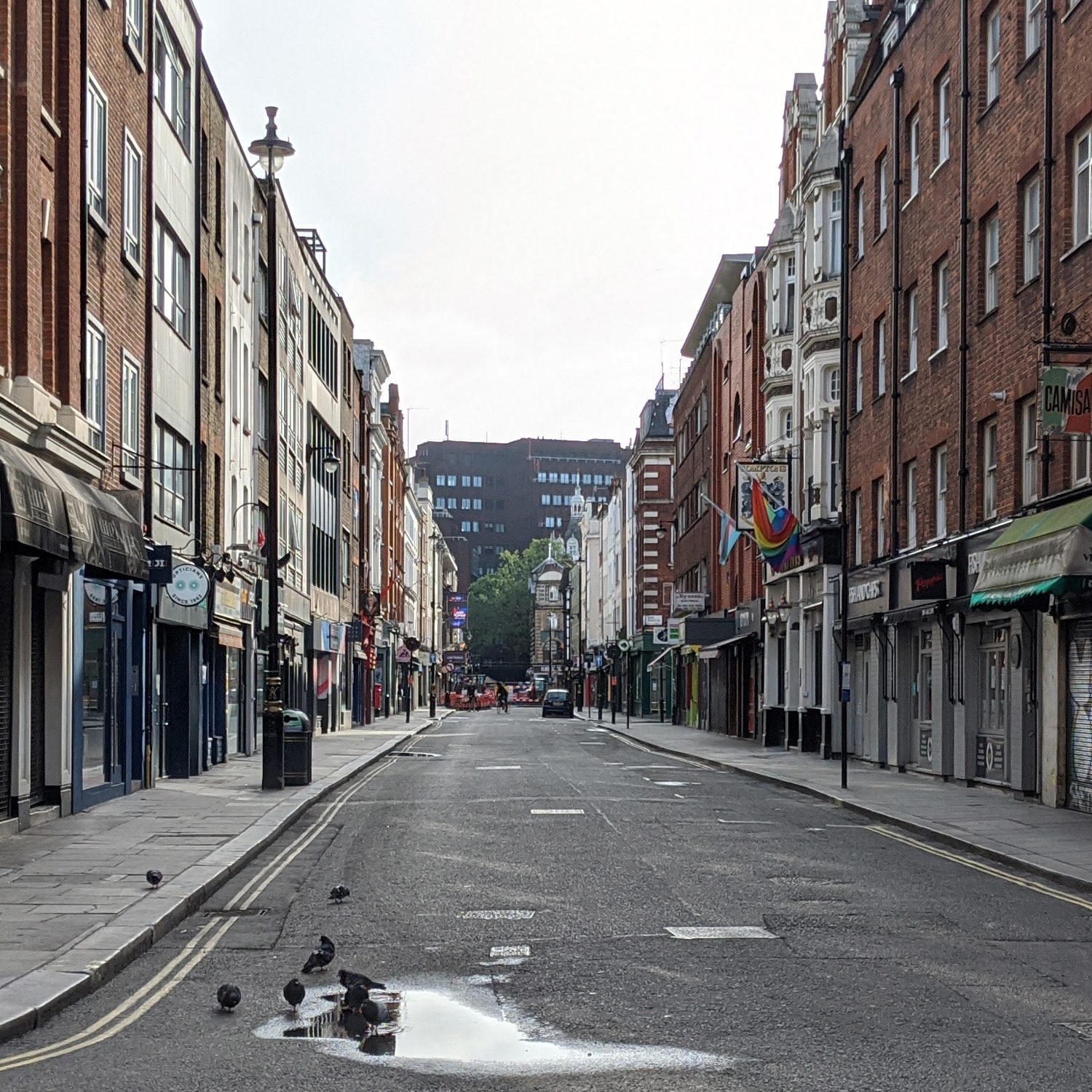
The Challenge

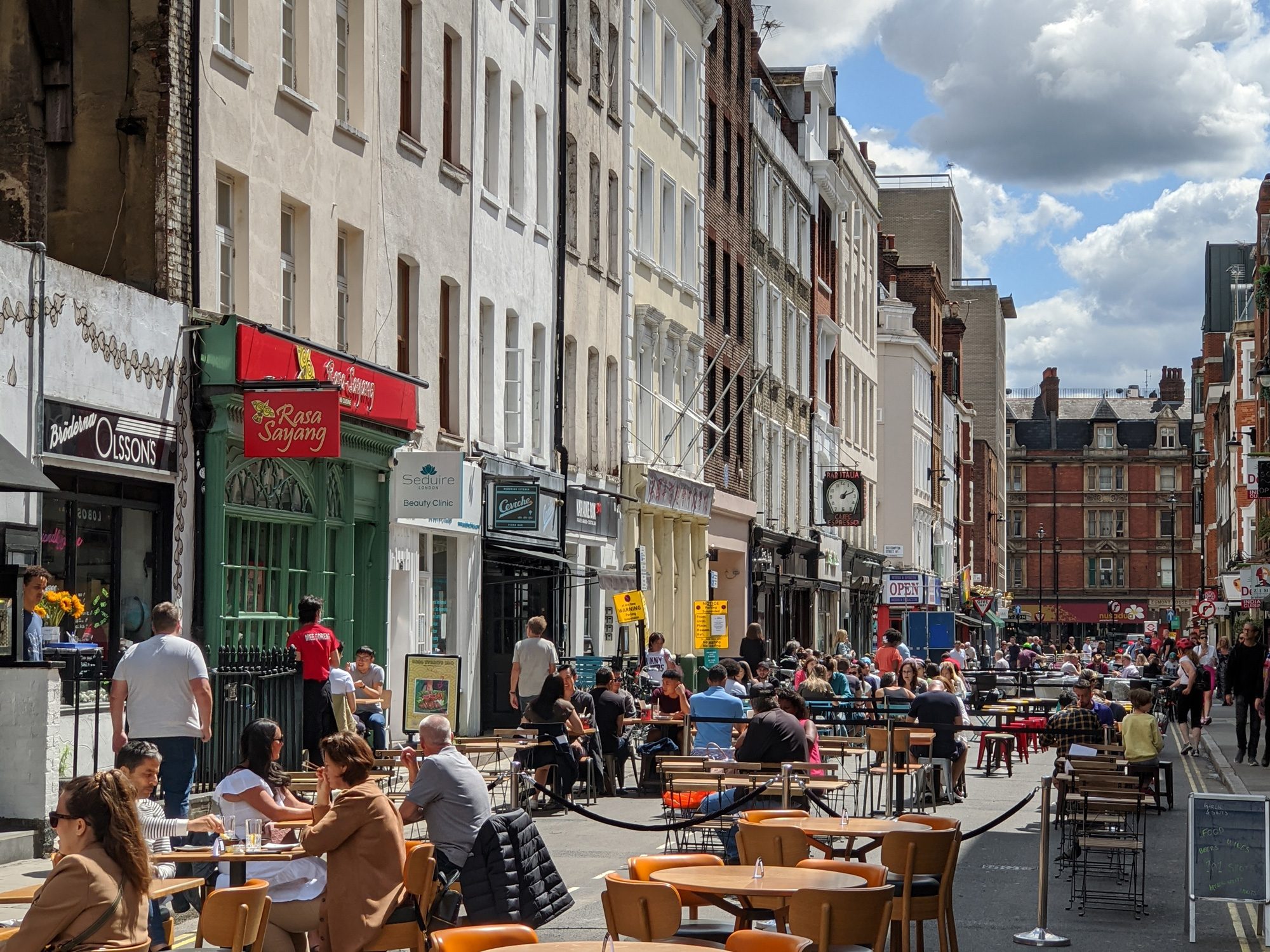
Old Compton Street - June 2019
Old Compton Street - June 2020

Mapping

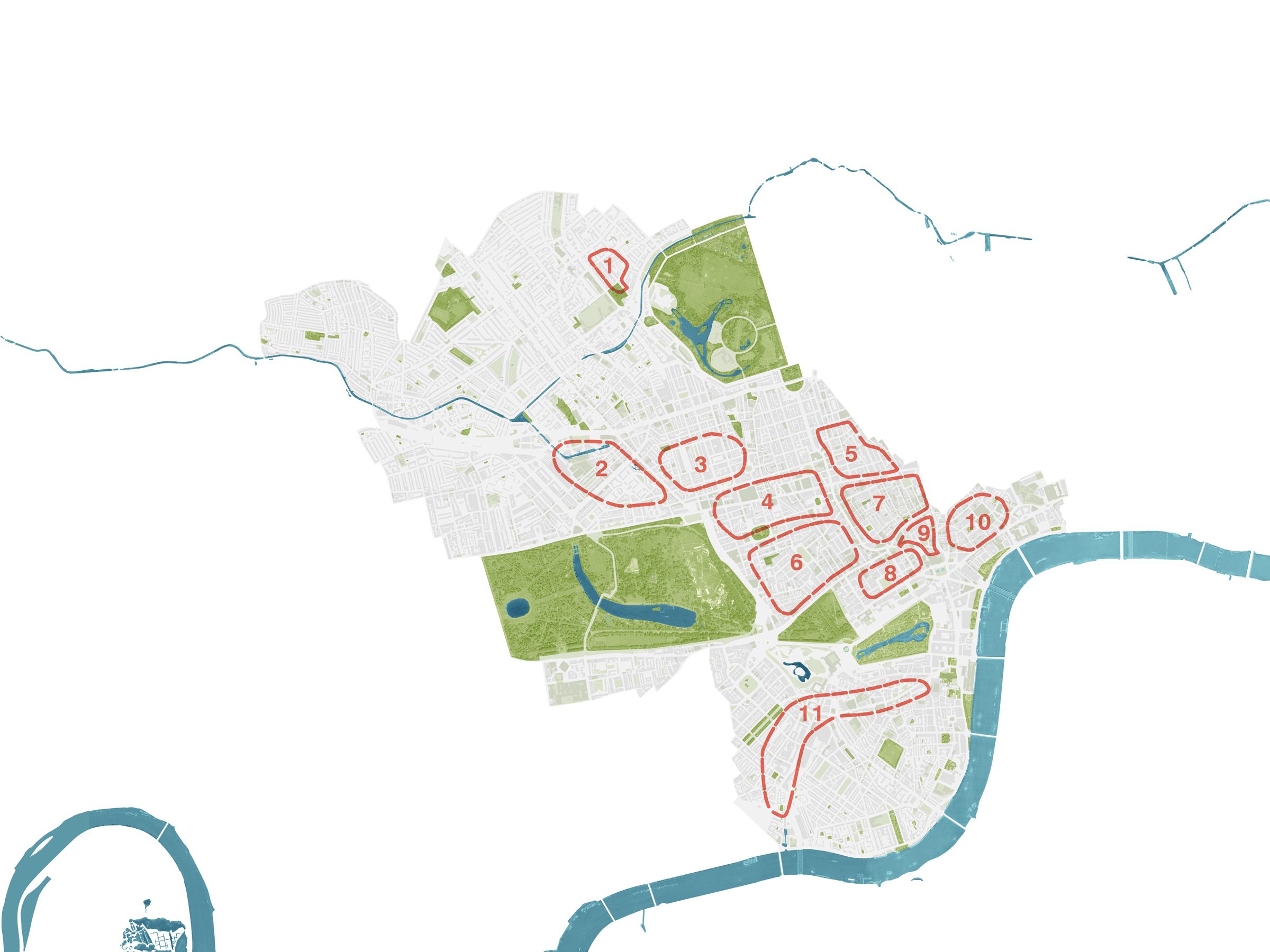
Areas under consideration for hospitality interventions: 1. St John's Wood / 2. Paddington / 3. Marylebone / 4. Oxford Circus Area / 5. Fitzrovia / 6. Mayfair / 7. Soho / 8. St James's / 9. Chinatown - Leicester Square / 10. Covent Garden / 11. Victoria

Strategies

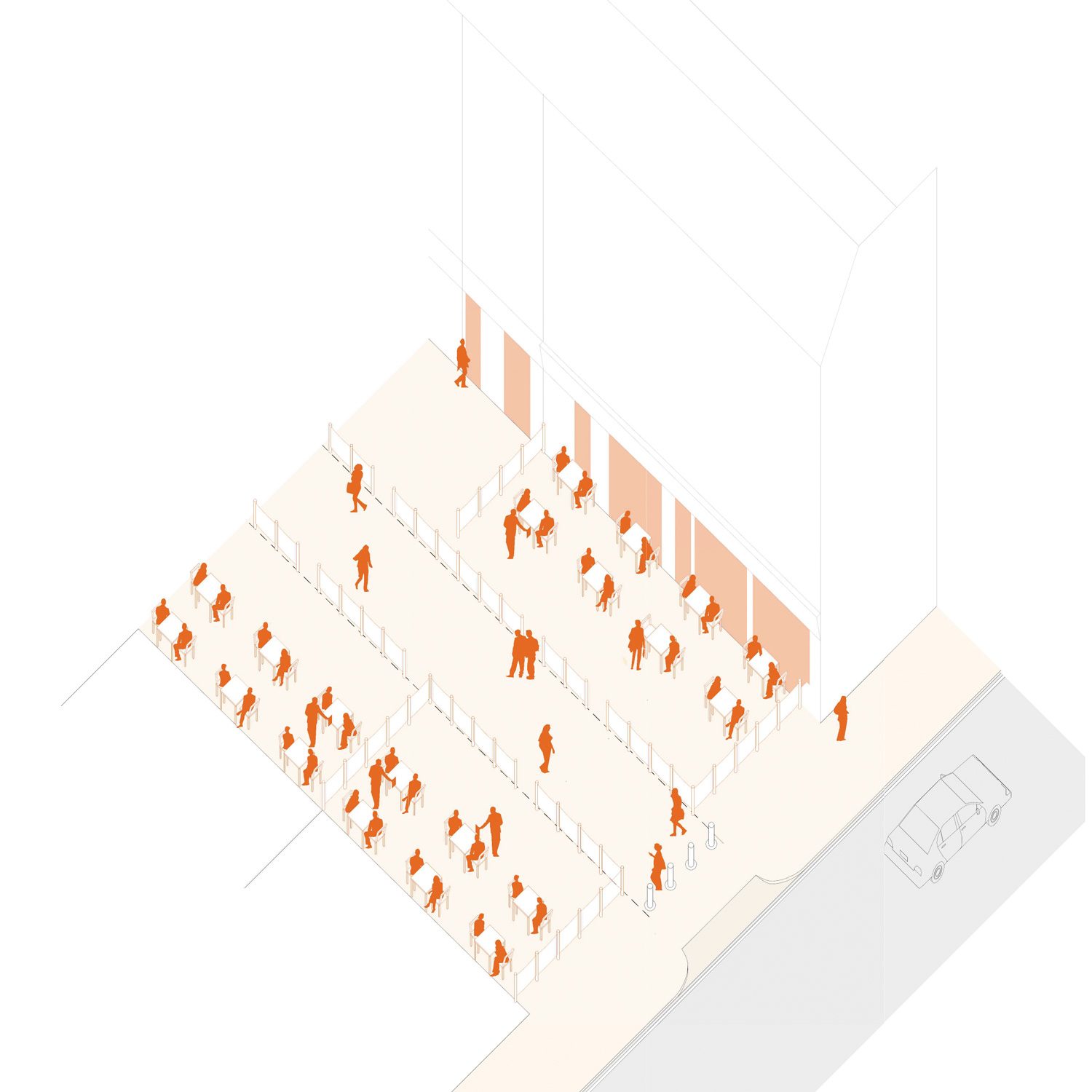
Extension of outdoor seating areas / In focused areas extending the hours of timed closures to support dining within the carriageway areas
Temporary footway widening works - Type 1 / Outdoor dining against building frontages, with widened footways allowing social distancing between diners and pedestrians
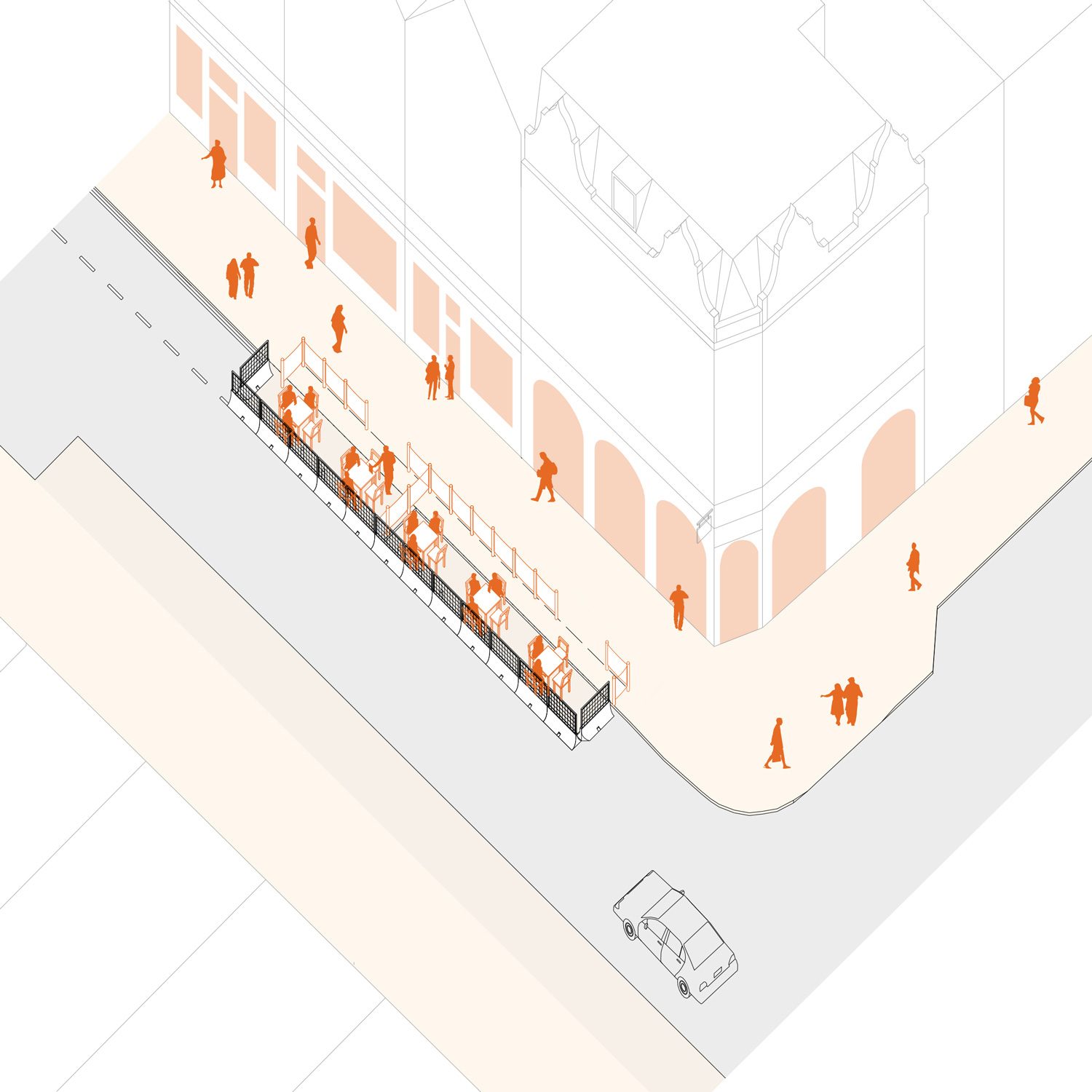
Temporary footway widening works - Type 2 / Outdoor dining in new areas of widened footway, with the footway retained for pedestrians
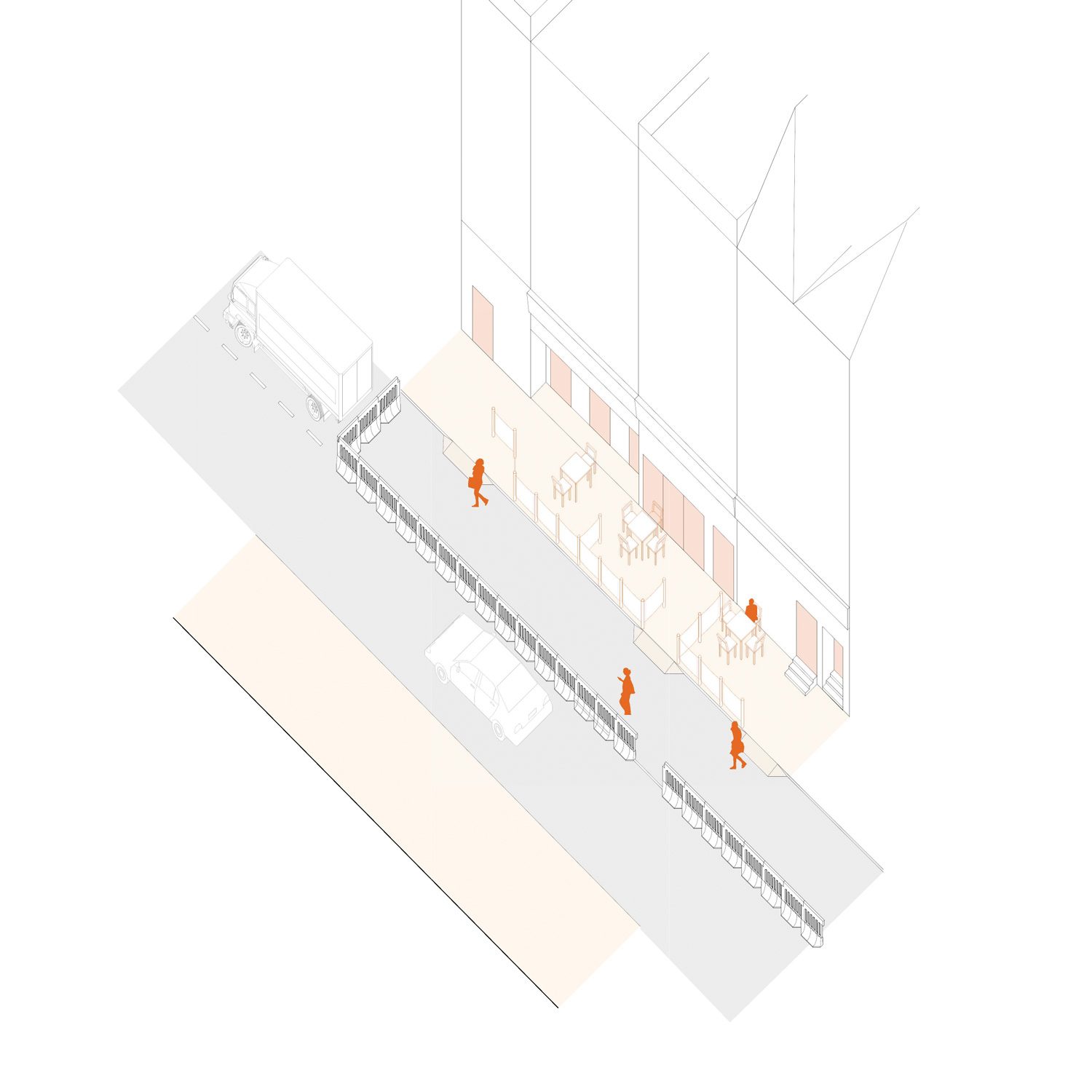
Timed closures to vehicles / Supporting dining against building frontages - with pedestrians in the temporarily closed carriageway

Implementation

CONTACT

studio@5thstudio.co.uk

We are currently interested in receiving CVs and short portfolios from Part 2 Urban Designers. Please contact us via recruitment@5thstudio.co.uk

We actively encourage qualified applicants from underrepresented backgrounds to apply.

LONDON Unit 14 21 Wren Street London WC1X 0HF t +44 (0)20 7837 7221 View on Google Maps

CAMBRIDGE Darkroom Gwydir Street Cambridge CB1 2LJ t +44 (0)1223 516009 View on Google Maps